
Architecture of Destiny: Logic of Contrasts & Ledger of Karma
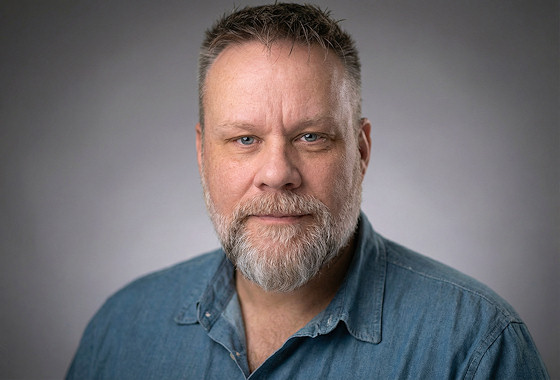
By Brian Poulsen | March 2026
In my last publication, I described how violent events from the past can survive as psychological scars and create phobias in our modern lives. It showed us that consciousness remembers its experiences, but it raises the question of why life is filled with so much resistance in the first place.
In this work, I will examine how opposites—such as wealth and poverty or political differences—are the very prerequisite for our development. Why are some born into extreme abundance while others are locked in a lifelong struggle for survival? Why do the same patterns repeat in our relationships and finances, regardless of how much we fight them with our logical mind?
We will look at how our actions return to us and how this process shapes what we can call the fundamental Destiny Architecture of consciousness. I will draw threads from ancient Buddhist observations of suffering and desire into a modern reality where everything from lottery wins to a walk in the pouring rain becomes part of a larger logic. It is about understanding that we are in a comprehensive educational institution where adversity is our most vital nourishment.
Chapter 1: Contrast as the Language of Life
When I look at the way we experience the world in our daily lives, it quickly becomes clear that our senses wouldn’t function at all without opposites. This is a fundamental physiological logic found throughout nature. If I enter a room where the air is exactly the same temperature as my skin, I feel nothing. It is only in the encounter with cold or heat that my consciousness registers a difference and thereby gains an experience of reality. The same applies to our sight; if everything were one long gray surface without shadows or flashes of light, we would effectively be blind because there would be no information to sort. Nothing in our universe can be understood or defined unless it has a counterpart to reflect against.
This principle doesn’t just apply to our bodies and senses. It also permeates the way we have organized our society. Look at politics, where we almost always end up with a balance of power divided into two major wings of about 50 percent each. We typically call them the Red and Blue blocs. It looks like an eternal and perhaps tiresome struggle for power, but seen from the outside, it resembles a necessary natural law. Opposites are the very engine of our collective development.
If we played with the idea of completely removing one side—say, the Blue bloc—we wouldn’t end up with a society where everyone was simply in agreement and “red”. On the contrary, the Red group would quickly begin to divide from within. New differences would arise; some would become more cautious and conservative, while others would become more radical or green. One half would automatically become the “new blue” counterpart to the others. This happens because our consciousness simply needs this relationship of opposites to navigate and make choices. Without resistance and something to play against, all development grinds to a halt.
This relationship of opposites is also a crucial part of our individual education in life. For a human being to develop true understanding and empathy, it is necessary to have tried standing on both sides of the fence. That is why, through our many lifespans, we must experience the spectrum from both sides. It means that in one life we can be economically on top and feel a natural security in the blue political agenda, where we highly value individual freedom and drive. In another life, we might be the ones locked at the bottom of society, thereby feeling the necessity of the red safety net and the community’s help.
It’s not necessarily about those in the Blue bloc being rich and those in the Red bloc being poor—reality is far more nuanced than that. Instead, it’s about the values and outlooks on life that we need to feel on our own bodies. A climate activist in the Red bloc might argue that the rich in the Blue bloc are destroying our planet in the pursuit of money. Here we see two poles, capitalism versus socialism, clashing. But in the grand scheme, both sides are vital parts of the formation of consciousness. We don’t just learn from those we agree with; we actually learn the most from the frictions and discussions that arise in the encounter with those we perceive as our opponents.
The world, in other words, is not broken, even though it is full of conflict and vast differences between rich and poor. It functions exactly as it should—as an arena where contrasts force us to take a stand and thereby expand our understanding of other people. Every time we feel a strong aversion toward “the others,” it is a sign that we are in the middle of a learning process. We are here to live through the extremes until we have gathered enough data and experience from both sides to navigate with a much higher degree of maturity. This movement away from the one-sided and brutal toward a more spacious empathy is the very goal of our journey through contrasts.
Chapter 2: Materialism and Desire
Even though we now understand that opposites are necessary, it doesn’t change the fact that they often feel unpleasant. We experience it as a form of suffering or dissatisfaction when life doesn’t go our way.
Buddhism has looked at this phenomenon for thousands of years, and if you strip away the religious elements, you find precise observations of our consciousness. They describe suffering as something that arises because we have a deep tendency to cling to what feels pleasant while trying to flee from everything difficult. They call this “attachment,” and this is the source of much of the unrest we feel in daily life.
One can explain it as an attempt to stop a pendulum exactly when it is in the side you like best. We want the surplus without the bills, and we want the tailwind without ever feeling the resistance. But since consciousness can only perceive through contrasts, it creates a violent internal resistance and unrest when we try to isolate ourselves behind a wall of material perfection. We often use expensive and unnecessary things to build a facade for the outside world. It’s not just about wanting to sit comfortably in an armchair ourselves, but about showing the neighbor and colleagues that we are on top, in tune with fashion, and can afford the extraordinary. We wrap our true selves in materialism to radiate a surplus that might not exist inside. But the more we try to polish the exterior to win others’ recognition, the more vulnerable we become when life’s inevitable bumps hit us and scratch the lacquer.
Materialism’s Smokescreen
Our modern daily life is permeated by what can be called a materialistic desire. We constantly try to buy our way into a permanent state of comfort, as if we can use things to buy others’ respect and hide our own challenges behind a wall of material success. We replace a functioning kitchen with a new, “time-correct” designer kitchen; we buy expensive brand-name wristwatches and fill the home with designer furniture—not because the old things are worn out, but in the hope that it can dampen the inner thirst for satisfaction.
But this is a battle we can never win with things. It is a form of ignorance about how the world works, because we overlook that the satisfaction of gaining something always requires the experience of lacking it first. It is, for example, the deep pleasure of finally sitting in a soft armchair after a long workday where you have stood for eight hours; that feeling only exists because you know the fatigue in your legs. If you hadn’t felt the fatigue in your body first, even the most expensive designer chair would just feel like a cold and indifferent object without any real value to consciousness.
Choosing Discomfort
Recently, I caught myself in this very mechanism. I have a fixed routine where I go for a three-kilometer evening walk a couple of times a week after dark. One evening, it began to drizzle, and shortly after, it was pouring. I had the choice of turning back and going home to the dry warmth in two minutes or continuing the walk for another half hour and getting completely soaked. I chose to continue. Instead of being negatively inclined toward the weather, I saw the contrast and decided to consciously “eat” the discomfort and accept it as a natural contrast.
It sounds absurd, but it gave a deep meaning in the moment. By choosing the sour weather and the wet shoes instead of fleeing from them, I took power over my own desire for comfort. I accepted the contrast, and suddenly the rain no longer felt like an enemy, but just a part of reality. It is a form of conscious calibration of the mind. When we practice going through the “rain” in our lives without demanding it stop immediately, the friction that otherwise creates suffering diminishes. We learn to include both sides of the spectrum in our understanding of order, making us much more robust against the challenges that karma later brings.
The Many Faces of Desire
But desire is also about many other things. If we look at ancient Buddhist observations, they speak of a thirst that exists in several forms. There is, of course, the pursuit of physical pleasure, but there is also a strong desire to be something specific—to achieve status, power, or to always be the one who is right in an argument. And then there is the desire we often overlook: the urge to get rid of something. This is the strong aversion that arises when we don’t want to feel boredom, don’t want to feel lonely, or when we refuse to accept life’s natural adversity and waiting times.
When I mirror this in the logic described by the philosopher Martinus, we can see desire as the very engine of our development. He explains it as a form of “life-hunger”. Just as physical hunger tells us the body needs food, our psychic desire tells us that our consciousness is hungry for new experiences, events, and contrasts. The problem arises when we try to satiate this inner hunger with the wrong means. We believe we can quench the thirst with more recognition from others or by winning every argument, but it corresponds to drinking saltwater to avoid thirst; it only creates an even greater thirst in our system.
This desire for reality to be different than it actually is right now creates a sense of inner wear and dissatisfaction because our will is working directly against the actual circumstances. We spend enormous amounts of energy wishing our circumstances were different or that people around us behaved in a different way. But every time we have a desire that fights against the reality we are in, we create suffering for ourselves. We try to force the pendulum to stand still in the “right” position, but nature’s order dictates that it must swing so we can collect the necessary data for our formation.
And it is precisely the ability to accommodate both the light and the dark that is the key to understanding our further development. We are here to learn to navigate in all kinds of weather until we no longer need to be forced into contrasts to understand their value. This requires us to dare to look at our own actions and the patterns we are a part of with the same honesty as one looks at a soaked hoodie and wet sneakers after a walk.
Chapter 3: Karma as Energetic Physics
When we begin to speak of karma, it is necessary to remove all notions of punishment and reward. There is neither a god nor a moral police watching us. Karma functions, in reality, as a form of energetic physics—a natural law ensuring that everything we send out in energy eventually finds its way back to its source. You can see it as energetic circuits. Everything we send out—whether thoughts, actions, or desires—functions like an arc that must eventually return to its starting point to complete the circle. To understand how this logic works in practice, we must look at the three different layers in which our consciousness operates.
Destiny Architecture and Locked Contracts
The first and most massive karma layer is what we can call the fundamental Destiny Architecture of consciousness. Here we are talking about the grand lines that often stretch back four or five lives. This is where the major ledgers are settled. If a consciousness through several lives has cultivated an extreme form of egoism, brutality, or total lack of respect for others’ lives, or has lived in a very one-sided way, an energetic imbalance is created that is so heavy it requires an entire lifespan to equalize.
The result is a form of “locked contract” that functions as a physiological limitation in one’s current life. This is where we find the explanation for the destinies that feel inevitable. For some, this means an architecture built for limitation. Here, it is important to distinguish between one’s own abilities and external pressure. One can be sharp, diligent, and have complete control over one’s finances, yet still feel as if the “scenery” of life itself is working against them. One can imagine it like a safety valve on a steam boiler: every time the pressure—or success—rises to a certain point, the valve ensures the pressure is released so you remain at the level you are meant to learn from. Every time you create a financial surplus, an external event arises that precisely neutralizes the profit.
I remember once, many many years ago, winning 6,000 kroner in the lottery, after which my car broke down a week later, costing exactly 6,000 kroner to repair. I gained no profit, but no loss either. I have experienced that exact pattern more times than I can count. It’s not bad luck or a lack of intelligence; it is the system maintaining a specific balance to keep the focus on my learning. It is the very scenery of life shifting to maintain balance.
But in the heaviest cases, this architecture can also lead a person toward total ruin or even toward criminal acts. This is not because the person is born evil or stupid, but because the energetic debt from the past is so massive that consciousness is drawn into situations where it must experience the consequences of its own previous actions up close. It can feel like a dark funnel sucking one downward. It is a ruthless but logical process where consciousness lives through its own destructive energy to finally understand the suffering and thereby develop empathy.
You can view this layer as a cosmic classroom where we learn through direct experience rather than theory. If a consciousness in previous courses has been in a position of great power and perhaps looked down on those who could not fend for themselves, the architecture will often ensure that in a later life, one lands in the exact opposite pole. By feeling the limitation and dependence on others in one’s own body, empathy becomes more than just a thought; it becomes integrated as a permanent part of our being. It is a necessary process ensuring that we get all human experiences under our skin.
However, it is important to state that nothing is 100 percent predetermined. Although we have a “contract” and some deep patterns with us in a destiny architecture, free will always exists as the navigator in our lives. One can see it as a drive: Destiny architecture has determined the road network and the weather, but you are the one behind the wheel. You choose how you drive and whether you want to fight the route or accept it. Thus, it is not a matter of total determinism (predetermined course), because the concept of determinism does not allow free will to operate independently from the individual’s control, which is naturally necessary for consciousness to develop.
Patterns in Our Relationships
The second karma layer in consciousness is about the threads we pull with us from our most recent few lives. These are the patterns that keep appearing in our daily lives, especially in our relationships and social life. This is not a locked contract like the first layer but rather an invitation to learn. We might experience meeting the same type of resistance or the same type of personality again and again, no matter how many times we change jobs or partners.
It is consciousness presenting the same scenario until we change our way of reacting. For example, if one has a tendency to always feel stepped on or overlooked, karma will ensure that one lands in situations where they are challenged on that exact point repeatedly. This is where one can use the experience of rain as a metaphor. One can choose to turn back and flee the discomfort, or one can choose to “eat” the contrast and walk straight through it. Only when we can stand in the situation without reacting with the same old patterns does the energy change and the pattern dissolve.
The crucial point here is that nature never wastes time on unnecessary suffering. The moment you have felt a certain type of adversity so many times that you have developed a deep, instinctive revulsion toward, for example, acting egoistically or oppressively, your basic “setting” changes. The karma that previously would have hit as adversity, accident, or loss will now only return in a much milder form. It might be a fleeting thought, a simple challenge, or a small daily hindrance that is quickly over, because the lesson is already integrated into one’s consciousness. The need for the harsh contrast has simply ceased because one has understood the point.
Feedback in the Now
The third karma layer is the current feedback we create here and now through our daily choices. In this layer, we feel the consequences of our actions almost immediately. If we, for example, consciously choose actions that damage the balance between ourselves and others—such as egoism, lying, or deliberate malice—an immediate resistance arises in the system. It can be felt as a knot in the stomach, an inner unrest, or that nagging feeling that one has done something wrong. It is consciousness’s own registration practice telling us that we have gone off course. This is where we have the greatest freedom to make adjustments. By changing small habits or choosing honesty and helpfulness in daily life, or changing the way we treat others, we send out new vibrations that quickly return as a lighter feeling in the mind and better contact with the outside world, resulting in an increased quality of life.
Dissolving the Contract
When you see through these layers, you stop feeling like a victim of coincidences where external things always thwart your success. You begin to understand that even the heaviest adversity is a sign that an old “energetic arc” from the past is being closed. It is a form of cosmic installment on an old imbalance that ultimately sets you free. The interesting thing is that simply seeing the pattern and understanding the logic—seeing the “contract”—is the first step toward dissolving it. The system no longer needs to shout so loudly through accidents, adversity, and other external circumstances; when you begin to analyze the logic behind your experiences, you can take responsibility for your own development and formation. This is where you can stop fighting against financial expenses or adversity and instead see them as necessary neutralizations that set you free to move on.
We are all, in reality, on a long journey through the entire spectrum of what it means to be human. The world is not unjust or broken; it is merely an extremely effective educational institution. The enormous contrasts we see between rich and poor or red and blue are, in fact, the pieces we each use to build our humanity. Every time we integrate a new contrast, we grow, moving slowly but surely toward a state where we no longer need the hard blows to learn to understand one another.
Chapter 4: Evolution Toward Conscious Balance
As we round off this journey, it is clear that Charles Darwin’s principle of “survival of the fittest” reaches far beyond the biological body and physical instincts. Where I described in my previous publication how brutality is a short-sighted strategy that ultimately leads to the downfall of consciousness itself, we can now see that true survival ability is about the maturity of consciousness in the face of life’s extreme contrasts. The “fittest” is not the one who fights hardest to win in the current life’s scenery, but rather the consciousness that manages to navigate both success and adversity without losing its inner stability.
Conscious Survival
In the grand perspective, we are in the process of phasing out the one-sidedness we see in sharp political and social divides. The consciousness that today is locked in a hatred toward “the others”—whether aimed at the red or blue wing, or at wealth or poverty—is in fact undergoing a necessary but painful learning process. In the perspective we have covered here, you only truly become “fit” to survive and thrive when you have matured in consciousness.
This means you have integrated information from all of life’s poles so thoroughly through previous experiences that you are no longer tossed around by the emotional storms contrasts create. You achieve a spiritual balance where you can see the logic in both individual drive and the community’s safety net as necessary variables in a healthy social structure, and where you can accommodate both success and failure with the same calm. Evolution drives us toward a point where we can accommodate the opposites within ourselves, rather than projecting them as enemies in the world. The true winner is thus the one who has achieved such a deep human integration that they can see the logic in the opponent’s position as clearly as in their own, and understand the value in every position in the grand game.
When the Contract is Fulfilled
This brings us back to the destiny architecture previously described through the unforeseen bills and locked life-conditions. The goal of this constant regulation is not to keep us down but to ensure we integrate the experiences we lack. Interestingly, this structural resistance slowly begins to diminish as our consciousness itself takes over the steering.
When we stop fighting against the financial blows or personal patterns and instead begin to analyze them as data for our own formation, our relationship with reality changes. It is here that one moves from being a victim of their “life-contract” to becoming a conscious participant in their own evolution. The moment you can stand in the rain with wet sneakers and an empty wallet without it creating inner wear or a sense of injustice, the architecture behind the limitation has, in principle, become redundant. The need to be corrected from the outside disappears when you have found the balance yourself.
Man as the Architect
The world is not a place characterized by random chaos or divine punishment. It is a precisely calibrated educational institution where everything from grand ideological wars to minor daily irritations serves the purpose of making us more whole. We are all collecting the necessary pieces of our humanity through the contrasts we encounter.
The real evolutionary victory is not avoiding the rain or winning the lottery, but reaching a point where you understand that both light and dark are necessary fuel for our insights. When we reach that point, we are no longer just pawns being moved around in a karmic game we don’t understand. We become the conscious architects who can navigate any contrast with the calm that follows from knowing that everything ultimately serves our own formation. We are here to learn to understand darkness as the prerequisite for light—and in that realization lies the ultimate freedom to live.
Next time: The Biology of Consciousness
Now that we have established the reason why we incarnate through several life-contracts and meet resistance, it is time to switch tracks and investigate how this transfer of experiences actually happens in our physical body. In my next publication, we dive into the technical biology of consciousness and look at the three layers: normal consciousness, the subconscious, and the eternal over-consciousness.
We will investigate how DNA functions as a biological receiver rather than a hard drive, and how our personality is “downloaded” gradually as the brain matures. I will present cases such as Suzanne Ghanem and Titu Singh, which shatter our linear understanding of time and force us to see the human being as a dynamic receiver of a stream of consciousness that never stands still. We will talk about “vacant biological receivers” and how traumatic memories can leave physical imprints before we are even born.
Until next time – keep seeking the light in the logic.