

UFO – part 2
By Brian Poulsen | May 2026
Phenomena in the Sky

When you, like me, have spent decades studying and filtering the countless reports of unidentified phenomena, you quickly learn to recognize man-made noise. Today, our modern airspace is so massively polluted by our own technology that it has become almost impossible to look up without being deceived. We have thousands of satellites drawing luminous trails across the night sky. Even experienced pilots today can be fooled by a flock of low-flying satellites catching the sun’s reflection at just the right angle, creating an optical illusion of crafts flying in formation. We live in a time where almost any strange light in the sky can most likely be explained away by space projects, defective weather balloons, drones, or routine military exercises.
Precisely because of this modern congestion above our heads, it is incredibly tempting to draw a simple conclusion: That everything we cannot immediately explain is, in reality, just the tip of the iceberg of our own top-secret weapons and military programs. It is a strong argument in the debate that the objects effortlessly breaking our known laws of nature are not alien at all. Rather, they are the result of a global arms race that has taken place in secret. It is an enormously comforting thought, because it removes the unknown and places the technology safely in the hands of humans.
But I simply refuse to believe that we today – anywhere on our globe – possess the technology to build machines that effortlessly bypass all the physical laws of nature we know. We cannot build crafts that fly at insane speeds without creating an acoustic signature, only to stop in a split second. To claim that a superpower has secretly mastered that kind of physics is highly unlikely. Humanity is simply not that advanced. Moreover, that theory shows massive cracks when we peel away all our own modern noise and look cynically at history.
The Romans and Antiquity

For as long as man has looked up and kept records, there have been reports of physical anomalies in the sky that completely defied the technological capabilities of their time. From antiquity through the Middle Ages to the early colonial era, people have described the exact same phenomenon – they just used the limited vocabulary of their own era to explain it. This consistent historical pattern is more than enough to rule out the possibility that the phenomenon can be reduced to a modern American, Russian, or Chinese weapons program.
Long before we had even cracked the code to build a primitive hot air balloon, the phenomenon was already present. If we dive into the surviving historical records, a picture emerges of a solid, historical common thread.
We can look all the way back to the Roman Empire. Here, there are well-documented records from the most respected scholars of the time. In his great work on the history of Rome, the historian Titus Livius described how, in the year 218 BCE, phantom ships were observed shining in the sky, along with round shields in the air. Later, the natural philosopher Pliny the Elder described in his famous natural encyclopedia how a burning shield – “clipeus ardens” – sparked across the night sky. These were records made by scholars and military men of the state, who were simply trying to catalog reality, using whatever words they had to describe round, metallic objects.

Here we inevitably encounter one of science’s greatest pitfalls – modern, academic arrogance. There is a lazy tendency to automatically dismiss the people of the past as primitive beings, simply to sweep their records off the table as a meteor shower. But the Romans were excellent engineers and stargazers. They had seen thousands of shooting stars and atmospheric weather phenomena.
That these ancient sources hold real weight was underscored in 2007 when Dr. Richard Stothers – a researcher at the NASA Goddard Institute for Space Studies – published a peer-reviewed scientific article that soberly examined the Roman records. His conclusion was remarkably clear: Even when you filter out meteors and weather phenomena, you are left with ancient observations that are completely identical to modern reports of unidentified objects.
It is precisely this sober approach that makes the Roman sources so interesting from a perspective of probability, especially if we compare them to even older texts like the Babylonian writings or the Old Testament.

Here, there are frequent accounts of divine descents from the sky, and one could easily argue that the very inspiration for these myths once, at the dawn of time, originated from something real and physical. But where the oldest texts are characterized by a strong spiritual interpretation of the world, the Romans merely attempted to keep a logbook of their physical reality. In the Bible (particularly the Book of Ezekiel), wheels within wheels are described, capable of moving in any direction without turning.
We see similar traces repeating in art history, where several centuries-old paintings depict strange, glowing objects hovering over the landscapes. Although one must always be careful not to overinterpret art, it tells us that the very inspiration and idea of inexplicable celestial phenomena lay firmly anchored in human consciousness long before the Industrial Revolution.

Muddy River

Fast-forwarding to 1639, we find another tangible account in the North American colonial environment. Here, the governor of the Massachusetts Bay Colony, John Winthrop the Elder* (1588 – 1649), kept a dry and meticulous diary of life in Boston. He soberly noted how several well-regarded men had observed a large, luminous object flying back and forth over the Muddy River at enormous speed, before suddenly shooting directly against the wind. Even more remarkably, when the light disappeared, the men suddenly found themselves a full mile further up the river, directly against the tide, with no idea how they had ended up there.
These deeply religious and dutiful Puritans had absolutely no incentive to invent fictional tall tales, which in the worst-case scenario could cost them their lives in the pillory – they merely reported a physical light and an event that broke the logic of their time.
- It is important to note that the diarist John Winthrop should not be confused with his son of the same name, John Winthrop the Younger (1606 – 1676), who was governor of Connecticut and became notorious decades later for organized land thefts from the natives. Our source here is strictly the father.
When you layer these historical and logical components on top of each other, probability inevitably begins to point in one specific direction. The phenomenon was here long before we invented the technology to conquer the airspace ourselves.
Mankind in the Air and the Age of Radar
In principle, one could look for sporadic reports of celestial phenomena throughout the dawn of aviation and during the First World War, when mankind first left the ground. But this is historically muddy territory, characterized by primitive machines, open cockpits, and great uncertainty. It is not until the outbreak of the Second World War that we truly enter an era where observations gain regular professional and physical weight.

The war marked an absolute turning point. We suddenly found ourselves massively present in the very airspace we had previously only observed from the ground. We invented and refined the radar, and we sent thousands of highly trained young men up into the dark over both Europe and the Pacific to monitor the sky systematically.
It is precisely these men and this new technology that make the era so crucial to the history of the phenomenon. A fighter pilot or a bombardier from the 1940s was not just anyone. They were trained to navigate and survive in an extremely stressful and hostile environment. Their lives depended directly on their ability to instantly decode everything around them. They knew the difference between weather balloons, searchlights, anti-aircraft fire, shooting stars, and all known types of enemy aircraft. If they misjudged a reflection in the cockpit window or an atmospheric weather phenomenon, it could cost them and their entire crew their lives. Their testimonies therefore carry a completely different methodological weight than a random citizen’s observation from the ground.
Yet, strange and deeply concerning reports soon began to flow in from the Allied squadrons. Pilots started recounting glowing spheres – often described as red, orange, or white – effortlessly flying in formation with the heavy bombers. In the military logbooks and over the crackling radio, they quickly earned the nickname “foo fighters.”
Foo Fighters
These objects did not behave like ballistic weapons or primitive rockets. They circled the planes, followed their violent evasive maneuvers without the slightest difficulty, and then suddenly vanished at speeds that made the pilots’ own state-of-the-art machines seem like horse-drawn carriages. They exhibited a form of conscious, intelligent control, but they never attacked. They merely observed.
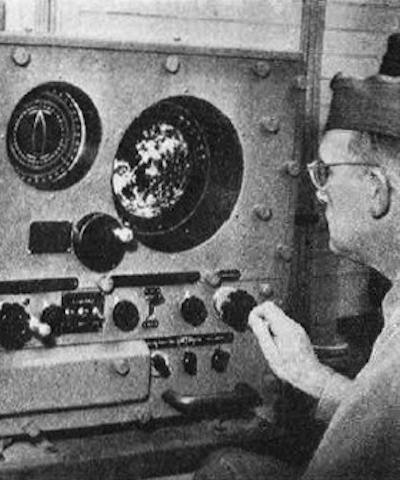
Radar operators recorded what they called “ghosts.” They picked up solid targets on the screen that looked like perfectly ordinary, conventional aircraft. But when they tried to lock onto them or calculate their speed, these “ghosts” suddenly accelerated to speeds that were physically impossible for the technology of the time, making them impossible to track. There are several well-documented cases where the phenomenon was confirmed by both the pilot’s own eyes and the military radar.
When something is picked up on a radar, it reflects radio waves. In order to reflect a radio wave back to a receiver, the object must have some form of physical mass. The fact that there is independent radar data, photographic evidence, and coinciding testimonies from hostile nations that did not communicate with each other, along with unequivocal displays showing the objects could be registered electronically and appeared as solid targets on the radar screen, merely underlines the fundamental premise: we are dealing with regular, physical technology.
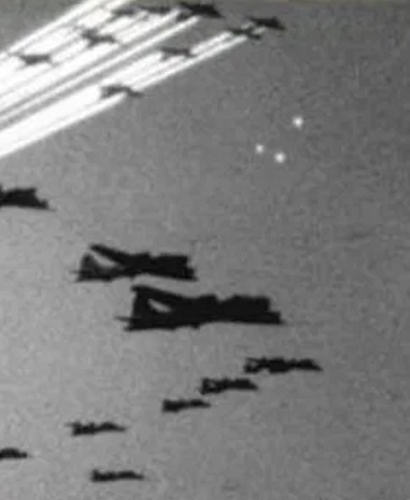
When we dive into the foo fighter phenomenon, there is one logical detail in particular that underscores our own human psychology and stubborn need to find comforting explanations. Both the British and the Americans were fully convinced that these glowing objects were a new, top-secret German weapon – possibly a psychological attempt to disorient pilots during nocturnal bombing raids. The absurdity is that the Germans sat with the exact same experience in their own cockpits, but were absolutely certain that it was an Allied superweapon – and exactly the same applied to the Japanese pilots over the Pacific, where the phenomenon was also registered, which is similarly well-documented. One simply attempted to automatically attribute the incomprehensible technology to the enemy, because the alternative was too difficult to grasp.
When the war finally ended and the smokescreen lifted, the Allies gained full access to the Germans’ innermost military and technological secrets. They found sketches for early jet aircraft and V-2 rockets, but they found absolutely nothing that even remotely resembled the technology driving the glowing spheres. The truth dawned slowly and heavily on the military intelligence services: none of the warring parties had built them.
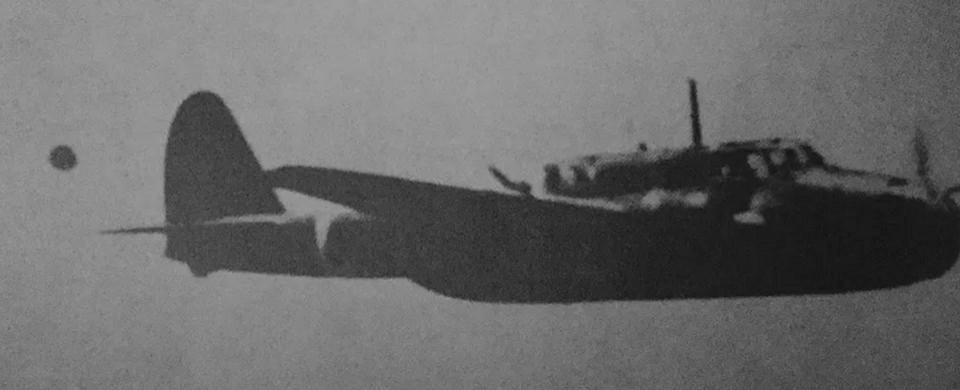
We had moved up into the cockpit, we had gained the radar as our new electronic senses – and we promptly discovered that we were far from alone up there.
The Modern Airspace
When the Second World War ended, the observations did not stop. On the contrary. In the decades that followed, the airspace above us gradually filled with civil aviation, and the Cold War’s massive radar network was stretched across the globe. With this increased surveillance came a continuous stream of reports. It was no longer just combat pilots reporting the inexplicable. Now, the reports came from seasoned commercial airline captains, police officers on night watch, and high-ranking military personnel. These were, and still are, professional observers who know the sky and its phenomena better than most, and who have put their careers and credibility on the line to report physical objects effortlessly playing cat and mouse with our most advanced fighter jets.
When we look at this overwhelming data material from the past many decades, we face the exact same logical wall that we met in the historical archives. If these objects were man-made, it requires us to accept an absurd premise. We have to believe that a superpower already in the 1940s, or for that matter just 40 years ago, managed to crack the code to a physics that renders jet fuel and classical aerodynamics obsolete. But technological development does not work that way. Paradigm-shifting science cannot be kept isolated in a secret vacuum for almost a century. If humanity had mastered that kind of energy generation and propulsion during the early Cold War, it would have revolutionized our society, our infrastructure, and our way of traveling long ago. We would not still be burning millions of gallons of fossil fuels to put a rocket into orbit.
Probability points massively to the fact that the technology operating in our airspace does not originate from our own drawing boards. We are dealing with superior, physical phenomena navigating within our atmosphere.
But even though the technology behind them is incomprehensibly superior to ours, it is apparently not infallible. Because if an object is physically present in our world, it is inevitably also subject to the possibility of failure. And when physical objects fail, they must ultimately surrender to gravity.
When Technology Fails
When moving from observing lights in the sky to talking about physical crashes, you inevitably run into a wall of skepticism. The most common counterargument is that a civilization with the ability to break the bounds of physics could not possibly build a craft that simply crashes. But that logic is rooted in massive technological arrogance and a lack of understanding of reality.
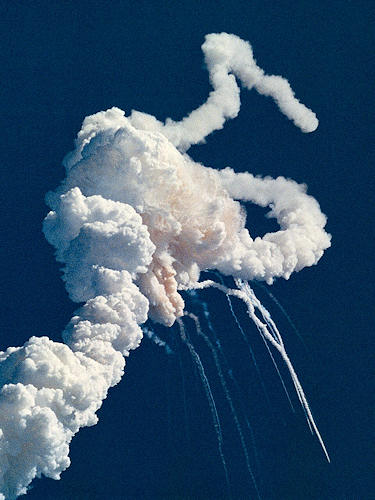
History is paved with our stubborn belief in the infallible. We built the Titanic with watertight bulkheads and called the ship unsinkable, right up until a foggy night in the Atlantic proved otherwise. Decades later, we sent the space shuttles Challenger and Columbia toward the stars as the pinnacle of human engineering. Yet it ended in disasters due to factors as trivial as a frozen O-ring and a loose piece of foam. We built the nuclear power plants in Chernobyl and Fukushima – the latter otherwise designed with the ultimate guarantees of being absolutely safe against the forces of nature – and still we experienced catastrophic meltdowns. Even modern commercial aviation, which we today consider an extremely safe and thoroughly tested mode of travel, is struck by the same unavoidable reality. Every year, people die in plane crashes because even the most advanced machines are susceptible to unpredictable accidents.
Complexity is never a guarantee against failure. On the contrary, an enormously high degree of complexity often means there are far more unknown variables that can trigger a chain reaction of errors. It is almost a universal law of nature that mistakes will inevitably occur. Even out in nature, the flaw is the driving force; our entire biological existence and evolution itself is, in its essence, a product of random mutations and deviations. To believe in the infallible is to ignore the foundation of the world we live in.
If we stick to the premise we have built up – that the phenomenon consists of physical objects caught on radar and navigating through our atmosphere – then we are forced to accept the next logical consequence. Everything physical is subject to the whims of physical laws. A craft can be hit by atmospheric disturbances, experience regular accidents due to the environment, suffer from a navigational error, or get caught in an unforeseen magnetic anomaly. As long as something interacts with an environment and is driven by some form of technology, a margin of error will exist.
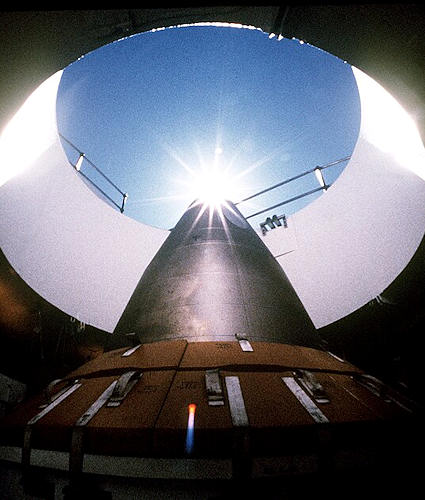
One of the most persistent theories about the crashes is precisely about environmental variables they might not have anticipated. These crashes often occurred near American nuclear and military bases, which in the years right after WWII had just begun testing entirely new, extremely powerful radar and microwave systems. If the UFOs operate via highly sensitive electromagnetic fields or consciousness technology, they perhaps didn’t just crash – they flew straight into an invisible wall of man-made microwave noise that short-circuited their systems.
When operating in our airspace over centuries, perhaps even millennia, sooner or later you hit a statistical inevitability. It is not at all a question of whether a superior technology can fail. It is solely a question of when the statistics catch up with them. Things that fly will, at some point, fall down.
That is exactly the reality we land in after the Second World War. As the radar network was rolled out and airspace surveillance became massive, we didn’t just begin to observe things in the air. We began to register physical crashes. This removes the phenomenon from the abstract mysticism of the heavens and leaves us with the absolutely most tangible aspect of the entire debate: The physical material. Because if something crashes down, no matter where it comes from, there must be wreckage left in the dust.
Secret Retrieval Programs
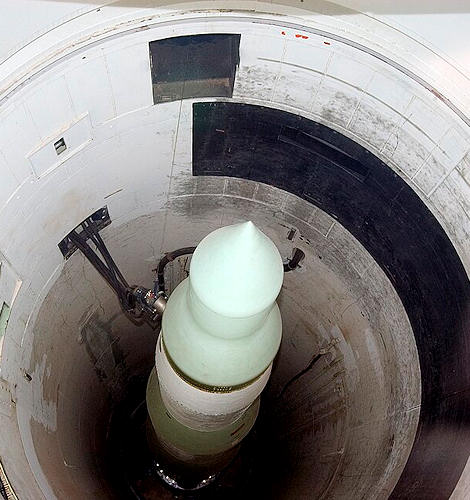
When an unidentified object hits the ground, physical evidence is left behind. And here we hit the core of the modern era’s handling of the phenomenon. However, it is not essential for my analysis to dissect the details surrounding the countless rumors of crashes that fill UFO literature. History has taught me that you must be incredibly careful not to be naive. Many of the most famous cases from the Cold War were most likely just stray, top-secret satellites or Soviet spy probes. The fact that the military moved in and massively covered up these cases was most often exclusively about protecting and analyzing earthly military technology before the enemy did – not about covering up visitors from space.
Because these cases are shrouded in decades of deliberate secrecy and contradictory explanations, it is nearly impossible to discern what is earthly space junk and what might potentially be something entirely different. Therefore, I will leave the specific individual cases aside. Instead, I will look purely analytically at the hard-nosed, logical chain reaction that is inevitably triggered among the superpowers if an incomprehensible and foreign object hits the earth.

In a world marked by geopolitical tensions and arms races, the absolute first military instinct is to secure the impact site. If a nation gets its hands on a technology that seems capable of manipulating gravity and traveling at hypersonic speeds, it equals a strategic advantage of unimaginable dimensions. For good reason, you do not call a press conference to share the discovery with the rest of the world. You isolate the area, remove the material under the cover of darkness, and hide it away in deeply classified factions of the military-industrial complex in the hope of being able to decode, decipher, and recreate the technology.
When the Cover-up Cracks
That this clearance work has actually taken place over decades is not supported today by blurry photographs or anonymous rumors, but by a completely new and far heavier form of evidence. We find ourselves in a time where the cover-up is slowly cracking from within. High-ranking intelligence officers, former defense employees, and people with the absolute highest security clearances are now stepping into the light. These are individuals whose job description for years has been to analyze airspace threats and handle classified material for the highest authorities.

When these people choose to put their careers, their reputations, and their freedom on the line to testify under oath before the US Congress – with claims that there are illegal, highly secretive retrieval programs in possession of exotic material of non-earthly origin – the debate fundamentally changes character.
It can no longer simply be dismissed as pure fantasy or a tin-foil hat conspiracy when the witnesses stepping forward are the very same highly educated experts to whom we normally entrust our national security. The probability that a broad cross-section of highly decorated officials and military personnel would independently commit perjury and invent a global cover story about retrieved objects is vanishingly small. The most likely scenario, when looking at the sheer volume of credible statements, is conversely that the physical proof of the phenomenon is already in our custody, locked away behind layers of bureaucracy and national security interests.
The Global Silence
When we consider the sworn testimonies from the US Congress, a critical question quickly arises: Why do we hear almost exclusively from the USA? If unknown technology is crashing, it must logically happen all over the globe. But here we have to look cynically at the geopolitical reality established during and after the Second World War. The US does not just have the world’s most powerful military; they have a massive network of forward bases and defense agreements spanning the entire globe – from distant Pacific islands and strategic positions in the Middle East to sovereignty agreements in Greenland and Europe. This global network acts as a fine-meshed logistical contingency. If an unidentified object crashes on allied territory or in a Western sphere of influence, the American military machine has the capacity to move in, cordon off the area, and remove the material long before the local public has even realized what has happened. The US does not need to retrieve all the cargo in the entire world; they simply have the infrastructure to vacuum up their half of it.
The other half of the globe naturally belongs to the other major power factors, primarily Russia and China. It is the absolutely most probable premise that these nations are sitting on exactly the same type of exotic material. And here we often hit one of the debate’s biggest stumbling blocks: Why on earth do archenemies keep the same secret? Why doesn’t the East simply humiliate the West by laying the evidence out for the world press?
The answer is most likely to be found in cold, rational logic. Proving to the world that the phenomenon exists would, at best, yield a short-lived political PR victory. But cracking the code to the technology itself will grant an absolute, global supremacy. The potential military and strategic gain of understanding just a fraction of the crafts’ propulsion, material physics, or energy source is so astronomical that no nation will ever reveal what they have in the basement until they fully master it themselves. If a world leader shows off their wreckage, they simultaneously tell the enemy exactly what technology they possess and how far along they are in their own research. In the ultimate technological arms race, total silence is the only rational strategy. You do not show your hand in the most important game in human history.
Or put another way, if you sat with the blueprints for a Concorde in the year 1492, you would not show them to the king or the pope. You would hide them in the basement until you had figured out how to build the jet engine yourself, so you could own the entire world. It is the ultimate balance of power that is at stake, and it explains exactly why reverse engineering is the most closely guarded secret in human history.
This also explains the marked absence of foreign whistleblowers. Firstly, we live in a Western information bubble, where we rarely gain insight into internal bureaucratic leaks from Asian or Eastern European intelligence services. But the all-important reason is found within the political systems themselves. It is only in a democratic system like the American one that there are even – although often under massive pressure – legal frameworks allowing people to testify under oath without automatically ending up before a closed military tribunal. Russia and China are autocracies with a fundamentally different tradition of internal security. If an officer in those systems tries to go to the press with state secrets regarding exotic technology, that person does not end up in a televised hearing. The person simply disappears. The fact that we do not hear from Russian or Chinese witnesses is therefore by no means proof that they lack retrieval programs. On the contrary, it is proof that their autocratic systems are functioning exactly as they were designed to do.
Incomprehensible Technology
Once the wreckage is gathered and transported away under the cover of darkness, the real nightmare begins for those who have to try and understand the technology.

It is called “reverse-engineering,” meaning the impossible task of taking something apart and trying to recreate it without having the manual.
If we analyze this dilemma, it is akin to imagining handing a modern smartphone to a Roman engineer. He would quickly be able to ascertain that the screen lights up and that the device reacts to touch, but he would lack two thousand years of basic knowledge about electricity, screen technology, microchips, and the global internet to even grasp how it works.
This is most likely exactly the wall our own scientists have been staring into for decades. They are holding physical material that transcends our current understanding of physics and materials science. You cannot just apply an electric current to an alien craft and expect it to fly. It requires an industrial and scientific infrastructure that we do not yet possess.
Protected by the Industry
This incomprehensibly slow work requires peace and quiet, and here we encounter the most ingenious and bureaucratic maneuver of the cover-up. When insiders today step forward and accuse the government of covering up the truth, it often creates confusion. Because “the government” in this context is not Congress or the elected president, but rather a deeply classified faction within the enormous American military and intelligence apparatus. If this closed faction wants to hide the greatest discovery in human history, the Department of Defense and the state institutions are actually the absolute worst places to store it. Governments and presidents change, politicians demand oversight, and freedom of information laws will, sooner or later, force transparency. The solution to that problem is as simple as it is cynical: You simply launder the operation by moving the physical material into the private sector. By placing wreckage and research programs deep in the basements of giant, private defense contractors, the technology is moved completely out of democratic reach.

Private companies are protected by ironclad laws on trade secrets and patents. They are not subject to the control of elected officials in the same way the military is. Logically, this means that when a politician asks the Pentagon if they are hiding unidentified crafts, the generals can look them straight in the eye and honestly answer no. Because it is not the state that has them – it is the industry.
Furthermore, the reality of what is called the “revolving door” in American politics and defense is that the two worlds – the official military and the private defense industry – have completely merged. The four-star general who might potentially give the order to inspect a defense contractor’s facilities usually has a highly lucrative board position waiting for him at that exact same place the day he retires. So who is going to give the order for an inspection of secret facilities when the watchdogs and the thieves eat at the same table?

Recent leaks and whistleblowers have pointed exactly to an extremely secret division within the CIA called the Office of Global Access (OGA).
It is rumored that they are the ones deploying globally to retrieve crashed crafts, after which they hand them over to the private contractors. They operate under an eternal, impenetrable umbrella of national security, where no politicians can look over their shoulders.

In the US security system, the concept of Unacknowledged Special Access Programs (USAP) exists. The rule here is that your rank – even as president, admiral, or secretary of defense – does not grant you automatic access. You only gain access if you have an absolute, operational “need to know.” And strictly speaking, the president does not have that if the program is about long-term reverse engineering in a closed basement at a private defense contractor.
But maintaining such a massive, privatized cover-up over so many decades has an extreme human cost. It requires a security apparatus that is willing to go to the ultimate lengths to protect the investment.

It starts with non-disclosure obligations of a caliber that threatens total economic and social ruin as well as many years in prison for the individual employee if they utter a single word.
The people who sit with the innermost knowledge have signed some of the world’s most extreme non-disclosure agreements (NDAs).
We are not talking about a regular corporate contract; we are talking about the Espionage Act. If a researcher or intelligence agent breaks their NDA and speaks about a reverse-engineering program, they are not just fired – they are charged with treason, which can mean life behind bars.
Human Costs and Disappearances
But legislation is only the visible part of the threat. In the US, the Espionage Act allows, in its most extreme consequence, for the death penalty in cases of compromising vital national security – a sentencing framework that historical reality has already shown examples of in other espionage cases. However, for a completely closed, unregulated program operating in the shadows among private contractors, an official trial with open presentation of evidence and media scrutiny is the absolute worst conceivable nightmare. If an insider suddenly develops moral scruples or threatens to go to Congress, one could fear, from a cold, cynical perspective, that it would appear to be a far safer solution to make the problem disappear quietly on its own, far away from the courts.
It is within this context that we must consider the disturbing trend that has made headlines in both American and international media in recent years. A statistical pattern is emerging where a disproportionately large group of top scientists, aerospace engineers, and high-ranking military personnel with the heaviest security clearances either vanish without a trace or die under bizarre circumstances – including at least one well-documented case where a person lost his life shortly before he was scheduled to testify in a case related to exactly this information. There is no reason to list the specific names and individual cases here, as the established press has already covered them in detail that anyone with an internet connection can dive into themselves. The pattern itself is the focal point.

Many of these cases draw threads to facilities like the Los Alamos National Laboratory in the state of New Mexico. To the general reader, this might just sound like a random American town, but Los Alamos is the birthplace of the atomic bomb and the absolute epicenter of the USA’s most top-secret weapons, nuclear, and quantum research. It is one of the world’s most heavily monitored and secured environments.
However, to maintain a sober and rational perspective, it is crucial to emphasize that even top scientists live ordinary, fallible lives. Financial ruin, personal crises, hidden affairs, or tragic accidents can hit any level of society, and we cannot possibly know the full truth behind each individual tragedy. We should not act as judges of individual destinies. It is the statistical anomaly itself and the fact that individuals seemingly disappear from this exact, extremely closed, and monitored field that constitutes the core of the argument.
When the series of inexplicable disappearances grows in the heart of the American defense apparatus, it logically leaves us with two highly disturbing, yet likely scenarios. Either a foreign power has managed to infiltrate the USA’s deepest secrets to an extent where they can undisturbedly eliminate some of the nation’s brightest minds – which in itself would constitute a national security crisis of incalculable dimensions. Or the system itself is aggressively cleaning up its own ranks.
And here it is relevant to consider whether the motive even needs to be about retrieved UFOs. If a brilliant researcher down in these laboratories suddenly cracks the code to a new, revolutionary energy source or propulsion technology – completely without help from crashed crafts – and naively plans to publish his findings for public peer review in a scientific journal, it could potentially trigger a similar reaction. For a military-industrial complex, the source of the technology might be secondary; it is the preservation of the monopoly that is crucial. Regardless of whether the technology is man-made or extraterrestrial, this suspicious cleanup points to a potential and extremely brutal balance of power: If you try to protect a technological trump card that holds the key to dominating the entire globe, there is a predominant risk that a human life is rapidly reduced to an insignificant statistical cost.
In Closing
With this, we have reached the end of the road for now. Through these two articles, I have tried to paint a comprehensive, sober picture of a phenomenon that stubbornly refuses to go away.
In the first article, we looked at our own incredible technological development – from the voyages of the Vikings and Columbus’ discovery of America up until today. We looked at the leap from primitive sailing ships to modern supersonic jets to illustrate the enormous perspective that lies within relatively rapid technological advancement. Against this backdrop, we examined the idea that a civilization thousands – or perhaps hundreds of thousands – of years ahead of us theoretically could navigate via quantum entanglement, and thereby be present anywhere without the need for linear travel. I furthermore argued that they would likely have an interest in monitoring Earth due to our unique, irreplaceable biological library.
In this second part, we have looked at historical observations going all the way back from antiquity and the Roman era up to highly trained fighter pilots during the Second World War, to substantiate that unknown objects have apparently been present in our airspace long before we conquered it ourselves, thereby establishing the logical premise that the technology cannot possibly stem from our own technologies. We have looked at the statistical inevitability that physical technology, sooner or later, fails and crashes. And next, at the logical hypothesis that a government would place potentially retrieved material in the private defense industry to bypass democratic control. Finally, we have touched upon the possible human costs and disappearances that might follow in the wake of protecting such a secret in order to preserve the greatest technological monopoly in world history.
What the next step in the narrative will be depends on the immediate future. There are rumors of imminent declassifications of previously classified material from the American side. Whether this actually translates into anything of substance, only time will tell.
Otherwise, I still have plenty of material lying around, which might unfold in a third article. Here, it could be interesting to look closer at phenomena observed beneath the ocean surface – the so-called USOs (Unidentified Submerged Objects) – as well as the very well-documented cases surrounding nuclear weapons. In several of these instances, multiple nuclear missiles have inexplicably been deactivated in a row, and the missile officers involved have stepped forward and testified under oath.
I could also dive into the theories about a geopolitical nightmare that the intelligence community calls an “ontological shock” – the devastating societal paralysis that will inevitably hit modern science, the global economy, and world religions upon true disclosure. And finally, one could assess whether the current, slow flow of information through media and whistleblowers is not a loss of control at all, but rather a highly calculated influence on collective human consciousness. We will leave these questions open for now.
Until next time – keep seeking the light in logic …or the logic in the light.
A quick note on support: I do not have a large, established network behind me, which means my social media channels are very quiet right now. If you found value in this article and appreciate the completely free format with no ads, the easiest way to support the project is to leave a like or a follow on my channels in the footer below. It breaks the silence and helps breathe a little life into these community platforms, which makes a real difference. Thank you!